
Vancouver’s coastal setting presents unique challenges for commercial roofs. With over 170 rainy days per year and persistent moisture throughout the fall and winter, roofing systems in Metro Vancouver must do more than keep the rain out—they must actively manage water, withstand biological growth, and endure prolonged exposure to damp conditions.
In this article, we’ll outline key roofing design and maintenance strategies for commercial properties in Vancouver’s wet climate. Whether you own or manage an office complex, retail center, warehouse, or mixed-use development, these insights will help extend your roof’s life and prevent costly water-related issues.
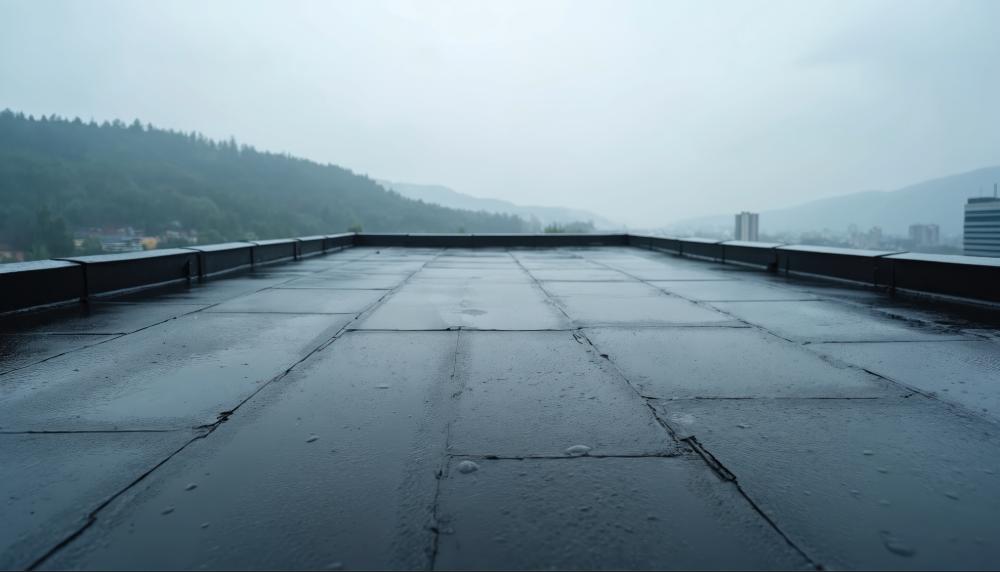
Design for Drainage: Managing Constant Rainfall
Ponding Prevention
Flat commercial roofs in Vancouver must be designed to shed water quickly and consistently. Standing water — known as ponding — can accelerate membrane deterioration, stress structural components, and lead to leaks at seams, penetrations, or around drains.
Key design features to prioritize:
- Positive drainage slope (minimum 2%): Achieved with sloped structural decks or tapered insulation systems.
- Primary and secondary drainage systems: Incorporate overflow scuppers to protect against blocked drains during storms.
- High-flow internal drains: Sized according to expected rainfall intensity using local plumbing codes.
Drain Maintenance
Clogged drains are a significant cause of leaks in Vancouver. Organic debris from surrounding trees (leaves, pine needles, moss) can rapidly block scuppers and downspouts, especially in the fall.
Actionable Tips:
- Install dome strainers or leaf guards on internal drains.
- Schedule biannual roof cleanings (late fall and early spring) to remove organic debris.
- During heavy rain events, inspect for ponding water lasting longer than 48 hours — a sign of poor drainage or localized sagging.
Material Selection: Build for Moisture Resistance
Moisture-Tolerant Systems
In a damp climate like Vancouver, material selection is critical. Roofing assemblies must resist both surface water exposure and interstitial moisture that may develop between the membrane and insulation layers.
Preferred commercial systems include:
- SBS-modified bitumen: Durable, layered systems with high puncture resistance and proven water resistance in ponding conditions.
- EPDM or TPO single-ply membranes, when installed with proper slope and heat-welded seams, provide reliable waterproofing.
- Inverted assemblies (PMR systems): Placing insulation above the membrane (using XPS) protects it from temperature cycling and UV degradation while enhancing drainage through filter mats.
Vapour Control Considerations
Given Vancouver’s humid air, it’s essential to assess whether a vapour barrier is needed below the insulation to prevent warm interior air from condensing within the roof assembly. This depends on occupancy type and insulation placement.
Best Practices:
- Use moisture-insensitive insulation (e.g., XPS or closed-cell polyiso).
- Ensure seams and penetrations are mechanically terminated and sealed, especially near skylights or RTUs.
- Avoid organic materials like wood fiberboard near the roof surface — these degrade quickly in humid environments.
Combating Moss, Algae, and Organic Growth
Ideal Conditions for Growth
Vancouver’s mild temperatures and high humidity create perfect conditions for moss, algae, and lichen. If left unchecked, these organisms trap moisture against the membrane, accelerate decay, and can lift seams or degrade coatings.
Common Growth Zones:
- Shaded roof sections, especially near treed areas.
- North-facing slopes that dry slowly.
- Low-traffic areas that don’t receive routine cleaning.
Preventive and Corrective Measures:
- Apply biocide treatments in late spring or early fall.
- Install zinc or copper strips at ridge lines (for sloped roofs) to slow regrowth.
- Avoid power washing — use soft-bristle brushes and approved roof-safe cleaners to prevent membrane damage.
Maintenance Tip:
Partner with a roofing contractor who offers annual moss removal services with appropriate chemical treatments. This not only preserves your roof but also maintains aesthetic value for visible surfaces.
Wind-Driven Rain and Perimeter Detailing
Rain at an Angle
Wind-driven rain in coastal storms can penetrate weak points in roofing assemblies — especially at perimeter flashings, parapets, and vertical wall transitions. Unlike vertical rainfall, angled water exploits gaps under metal flashing, behind wall claddings, or in unsealed joints.
Critical Detailing Zones:
- Parapet wall caps and base flashings
- Curb and skylight transitions
- Mechanical unit curbs and pipe penetrations
Design Recommendations:
- Use termination bars and counterflashings secured with mechanical fasteners.
- Avoid reliance on sealants alone — incorporate backup barriers such as self-adhered membranes.
- Install crickets and saddles behind curbs to divert water efficiently.
Inspection Tip:
After major wind events, check the roof perimeter and penetrations for new sealant cracks, lifted flashings, or debris that may have impacted protective layers.
Year-Round Maintenance in a Wet Climate
Inspection Frequency
Due to constant exposure to moisture, commercial roofs in Metro Vancouver require frequent visual and hands-on inspections — ideally every 6 months and after significant weather events.
Maintenance Plan Essentials:
- Drainage check: Ensure primary and overflow systems are clear.
- Flashing integrity: Look for cracked caulking, lifting seams, or corroded metal.
- Membrane condition: Identify early signs of bubbling, wrinkling, or ponding-related staining.
- Growth removal: Schedule safe moss and debris cleaning before winter and again in late spring.
Professional Help Matters
Many roofing manufacturers require documented maintenance to uphold warranties. A professional roof maintenance agreement can help protect your investment and reduce the risk of premature failure due to neglect.
Build and Maintain for Rain
Rain is a fact of life in Vancouver, but water intrusion doesn’t have to be. With the right materials, drainage design, perimeter detailing, and a proactive maintenance schedule, commercial roofs can perform reliably for decades — even in the wettest seasons.
At United Roofing, we specialize in designing, installing, and maintaining commercial roof systems tailored for Vancouver’s coastal climate. Whether your building needs a complete membrane replacement or simply better drainage and moss management, our team is ready to help.
Concerned about how your roof is handling the rain?
Book a waterproofing and drainage assessment with United Roofing’s Vancouver team today.