
Commercial roofing isn’t just about protection — it’s a critical factor in your building’s energy performance. With rising utility costs and increasing sustainability expectations, facility managers and building owners are looking to the roof as a strategic point for energy savings.
This article explores how cool roofing materials and improved insulation can reduce heating and cooling loads, enhance interior comfort, and provide long-term operational savings. Whether you’re considering a re-roof, retrofit, or simply want to optimize your building’s performance, this guide will help you understand the key principles and available options.
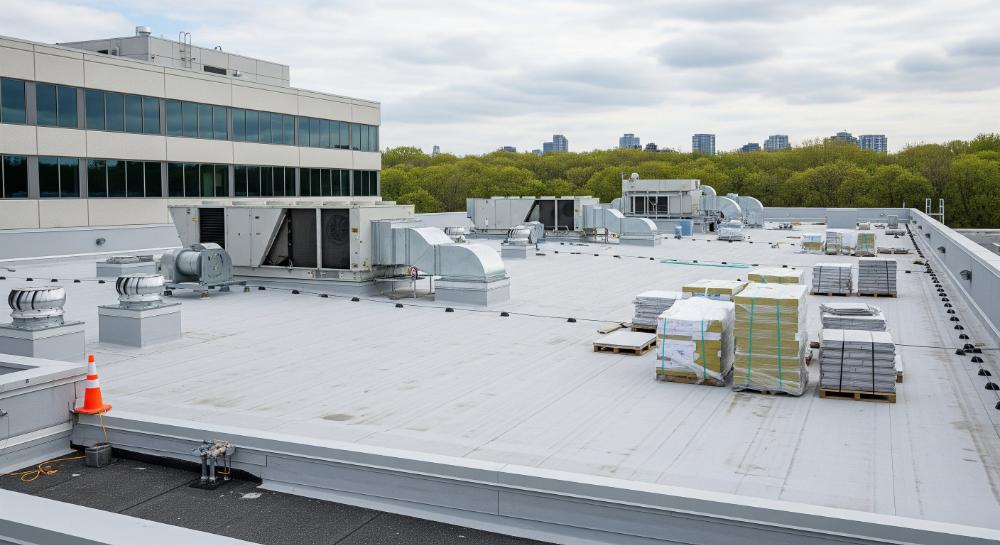
Understanding Energy-Efficient Roofing Systems
What Is a Cool Roof?
A cool roof is designed to reflect more sunlight and absorb less heat than a traditional dark-colored roof. This is measured by:
- Solar Reflectance (SR): Percentage of solar energy reflected by the surface.
- Thermal Emittance (TE): Roof’s ability to release absorbed heat.
Together, these determine the Solar Reflectance Index (SRI). The higher the SRI, the cooler the roof. For example:
- White TPO or PVC membranes: SRI 80–100
- Dark EPDM or asphalt: SRI <20
Benefits in Western Canada
- Vancouver: Reduces cooling load in warm months and helps manage interior humidity.
- Calgary & Edmonton: Cuts AC use in summer and moderates thermal cycling, which reduces material fatigue.
The Role of Roof Insulation in Energy Savings
Why Insulation Matters
Insulation resists heat transfer — keeping heat in during winter and heat out during summer. It’s especially crucial in regions with large temperature swings like Alberta.
Types of Roof Insulation:
- Polyisocyanurate (Polyiso): High R-value per inch, common in commercial flat roofs.
- Extruded Polystyrene (XPS): Moisture-resistant, used in inverted assemblies.
- Mineral Wool: Fire-resistant and vapour-open, suitable for specific code requirements.
Canadian Code Requirements
Under the National Energy Code of Canada for Buildings (NECB), new or re-roofed commercial buildings often require:
- RSI 3.5 to 5.0 (R-20 to R-28) effective insulation
- Continuous insulation above the deck to eliminate thermal bridging
Bonus: Increased insulation can also reduce condensation within the roof assembly, extending its lifespan.
Combining Cool Roofs and Insulation for Maximum Efficiency
Better Together
Cool roofs reflect solar heat, reducing the amount that enters the building. Insulation resists what does get through. Together, they:
- Lower interior temperatures by several degrees in summer
- Reduce HVAC load and prolong equipment life.
- Minimize roof material stress from expansion/contraction.
Example Scenario:
A Calgary warehouse installs a white TPO membrane with upgraded R-28 insulation. Result:
- 15% drop in summer energy use
- No more “hot box” complaints from top-floor staff
- Qualifies for municipal efficiency rebates
Tip: If you’re planning to install solar panels, a cool roof can improve their performance by keeping panel surfaces cooler.
Retrofitting for Energy Performance
Options Without Full Replacement:
- Reflective Coatings: coatings can be applied over aged membranes to restore waterproofing and boost solar reflectivity—ideal for aging but structurally sound.
- Over-Insulation (Roof Recover): Add insulation and a new membrane over the existing system if only one roof layer exists. This avoids a costly tear-off and boosts thermal performance.
Things to Watch For:
- Check for moisture in the current insulation before retrofitting. Wet insulation must be removed to restore performance.
- Ensure the roof structure can support added weight from new materials.
ROI, Rebates, and Sustainability Impact
Cost Savings
Energy-efficient roofs can reduce annual HVAC costs by 10–25%, depending on building type, system efficiency, and climate zone.
Rebates and Incentives
Check local and federal programs, such as:
- BC Hydro or FortisBC rebates for building envelope upgrades
- Alberta Efficiency Programs for commercial retrofits (when active)
- Canada Greener Buildings initiative (if applicable to your property type)
Sustainability Benefits:
- Contributes to LEED points for heat island mitigation, energy efficiency, and stormwater management.
- Supports ESG reporting for portfolio owners focused on reducing carbon footprints.
Optimize Your Roof for Energy and Cost Efficiency
Energy-efficient roofing isn’t just a green choice — it’s a smart business move. With the right combination of reflective surfaces and quality insulation, your commercial roof can lower utility bills, reduce equipment stress, and improve building performance for decades.
At United Roofing, we specialize in high-performance roofing systems tailored to Western Canadian climates. Whether you’re in Vancouver’s rainy west coast or Calgary’s high-heat summer zone, we’ll design a solution that delivers year-round value.
Ready to reduce energy costs and increase roof performance?
Book a commercial roofing energy audit with United Roofing today.